
You don’t need to be an expert to find Idaho’s hidden powder stashes—just curious enough to take that first step
Originally published in the 2026 Idaho Travel Guide
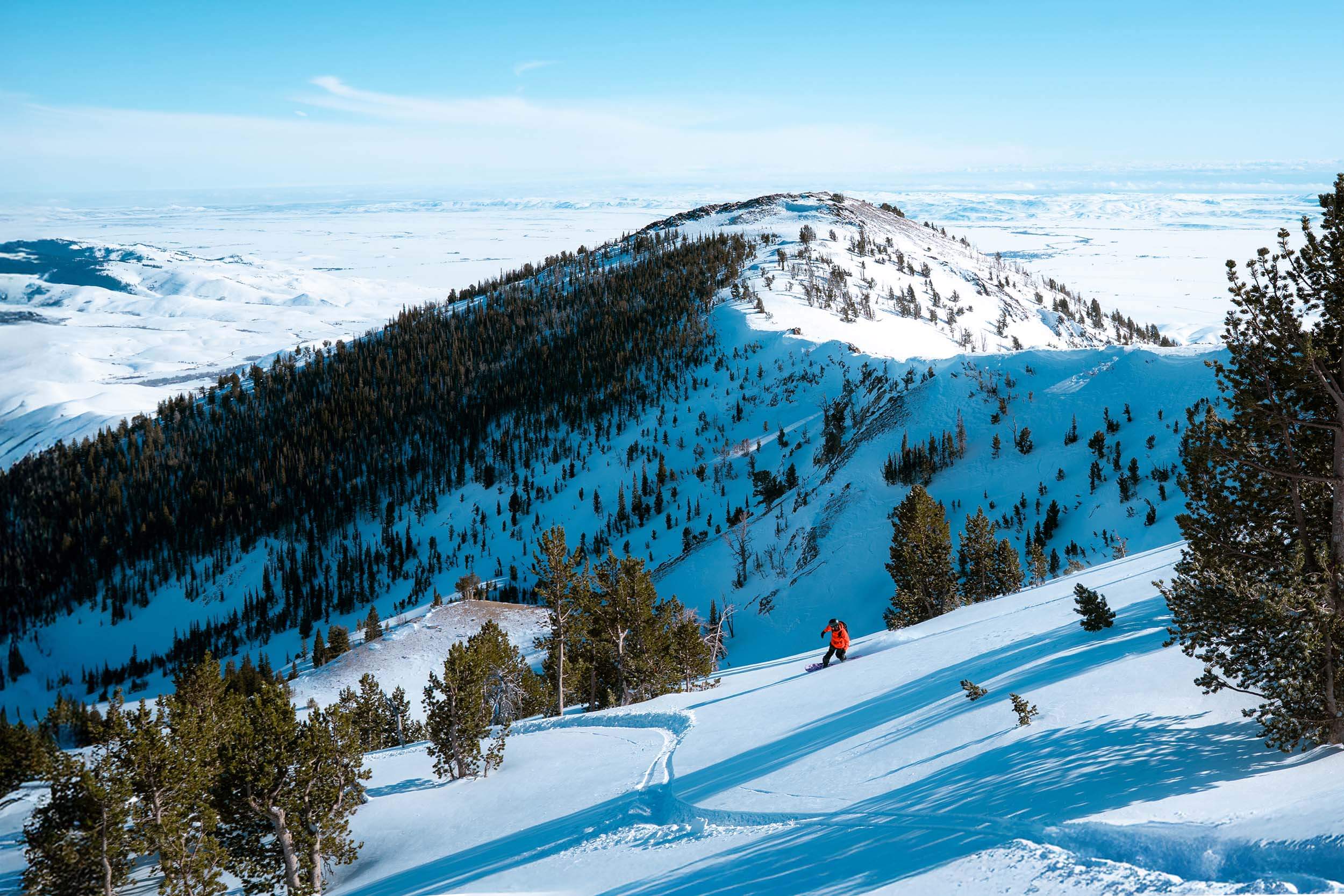
I’ve been chugging up a snow-covered slope in the Sawtooth Mountains for the last hour and a half, dipping in and out of trees wearing thick capes of snow. By the time our small group reaches the top of a ridge, my heart is pumping like a piston—and it’s not just due to exertion. I’m about to launch myself into an ocean of fluffy, untracked powder, and I’m equal parts nervous and excited.
I pop out of my skis and remove the long sticky strips of fabric (aka skins) attached to their bases, which allow me enough traction so I can climb uphill. I lock down my ski bindings, snap my boots in place and take a deep breath. To some, the idea of backcountry skiing is puzzling. Why would anyone spend hours trudging up a steep slope when they could hop on a whirring lift at a resort?
I’m spending a week in south central Idaho learning the basics of the sport, and I’m about to find out.
An Intro to the Backcountry
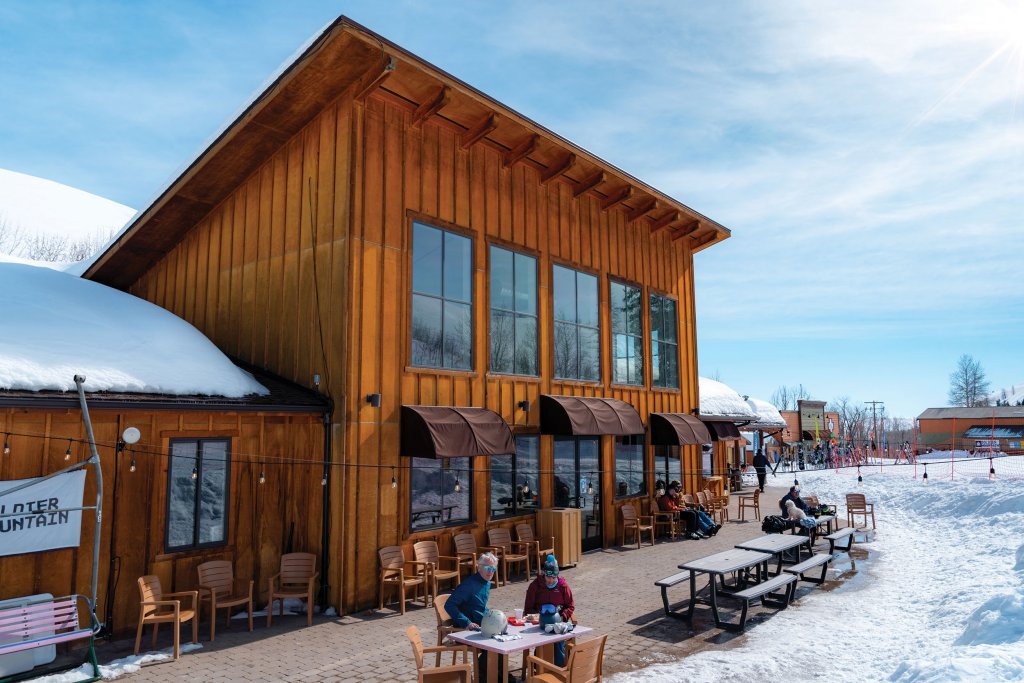
We’ve made Twin Falls our home base and plan to head out to three southern Idaho ski areas that offer easy backcountry access. “Easy” because the backcountry we will explore is partially lift-served by each mountain’s equipment. Our planned stops include Soldier Mountain, Magic Mountain Ski Resort and Pomerelle Mountain Resort.
“People are drawn to the sport because it gets you out of crowded resorts and into the real world,” says Richard Bothwell, owner of Outdoor Adventure Club and former executive director of the American Institute for Avalanche Research and Education, which offers research-based education programs for backcountry users. He has taught avalanche safety for more than 20 years, and he’s one of our guides this week.
Each morning, we gather to hash out plans for the day. To stay safe, we will ski low-angle slopes and avoid unstable snowpacks. If any one of us has a problem or concern, we’ll all head back together.
“Teamwork and communication really make or break success in the backcountry,” Bothwell says.
Honestly, I’m a little anxious. I live in Texas and only ski a few times a year. I know that avalanches are a real danger. But Alex Silgalis, an experienced skier and co-founder of the outdoor-adventure website Local Freshies, reassures me that we’ll be doing more tromping through the woods and communing with nature than tearing down mountains at top speed.
“It’s old-man hippie pow,” he chuckles.
We’ve got radios, avalanche beacons, shovels, a first-aid kit and even an inflatable sled, just in case.
Soldier Mountain
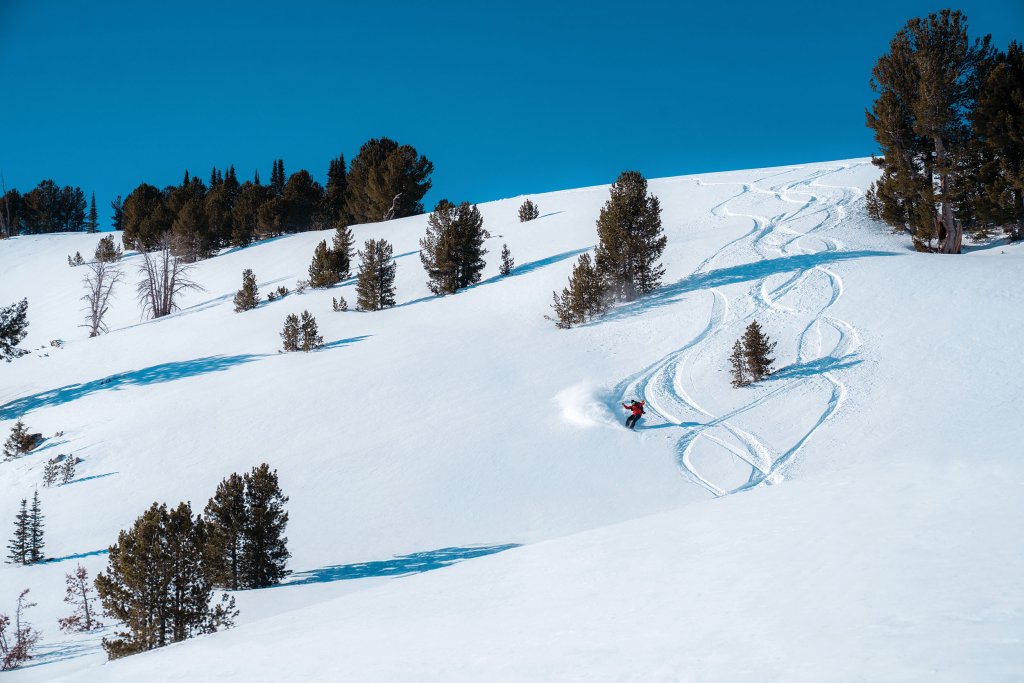
Our first stop is Soldier Mountain. We hop in a snowcat that carries us partway up the mountain. From there, we put on our skins and keep climbing out of bounds into the nearby Bridge Creek area. This is where I learn another rule of backcountry skiing: There is no guarantee of awesome snow, but you don’t need pillows of soft pow to have an epic adventure.
We skin up ridges that open onto views of the surrounding mountains. Our guide for the day, Santiago Rodriguez of Avalanche Science Guides, digs a pit and tests the snowpack. All the sunshine has turned the top layer of snow crusty, but the fun-o-meter cranks to high anyway. We take advantage of the conditions to practice our form on uphill climbs and perfect our transitions from skinning to downhill skiing.
When we return the next day, we head off in another direction from the base, skipping the snowcat and burning calories as we skin up a forest service road. We pause for a picnic, flop back on the snow for a rest, then keep skinning up. A few hours later, we find our line and the payoff comes in a nice swooping descent. It’s not powder, but it’s glorious. I dart like a penguin across a snow-covered hillside as we zip through trees and dip in and out of a ravine.
Magic Mountain Ski Resort
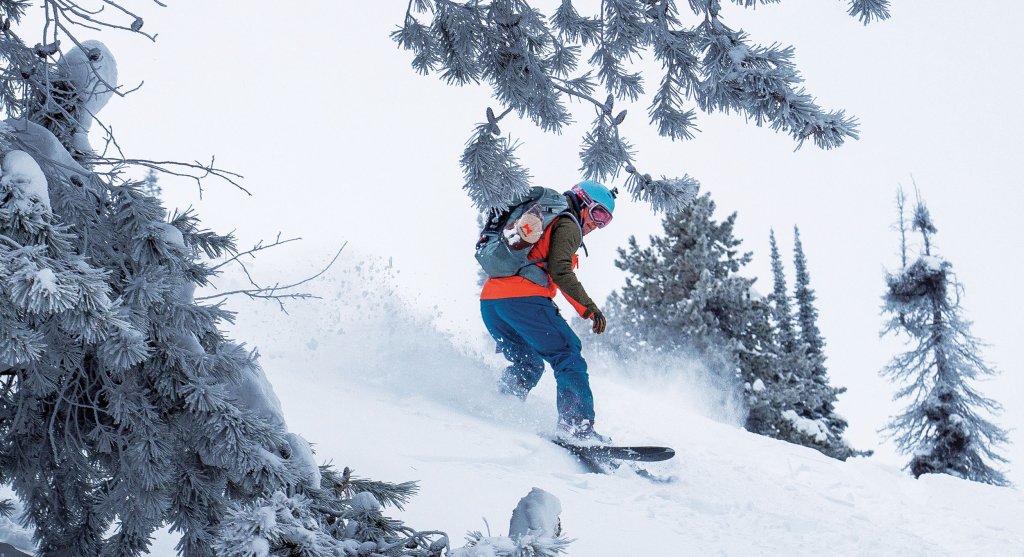
My mind travels back to the 1950s when we get to Magic Mountain. The base lodge is an old log cabin. Inside, skiers slouch in well-worn armchairs and warm their feet at a glowing potbelly stove. We leave our shoes under a bench and head to a two-person lift that carries us up the mountain. From there, we scoot outside the resort boundaries and into the forest. The scenery makes me swoon. The trees are frosted in thick coats of white, and I feel like I’ve stepped inside a snow globe.
At the top, it’s time to transition again. I’m getting better at putting on and taking off the skins, but it still feels like I’m handling giant strips of flypaper. We make a run on the best snow so far, then skin back up for another pass. We hike a little farther down the ridge and do it again. And again.
I don’t mind the work. It just makes the runs even sweeter.
Pomerelle Mountain Resort
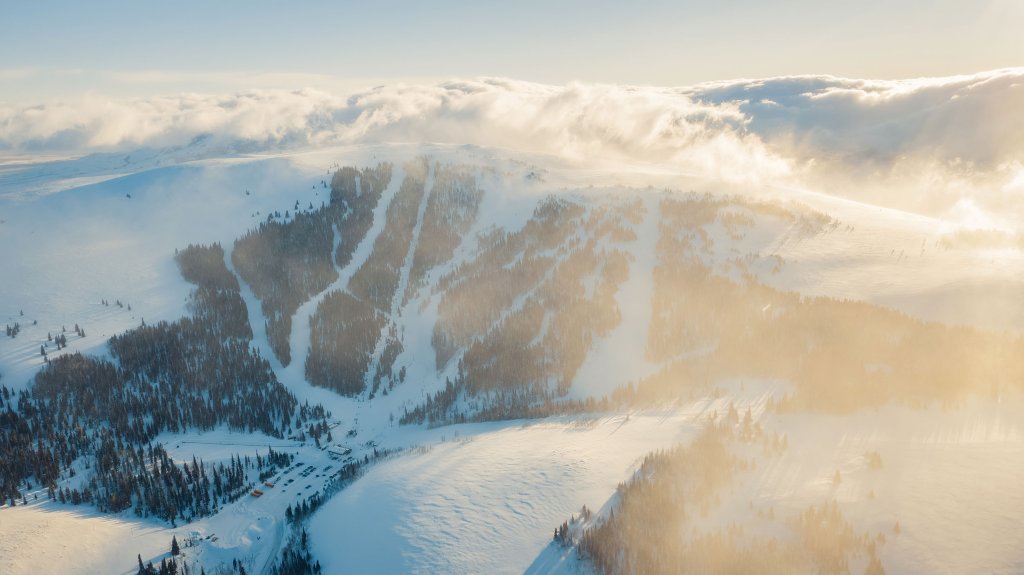
When we get to Pomerelle, we start by taking a lift, then trek away from the groomed slopes to a gloriously snow-spackled valley. There’s nobody out here. The snow is a white sheet of paper. We swoop down, then skin up another ridge, where we spend a few hours practicing rescue techniques.
We get a glimpse of our goal, too—a ridge that hides the descent into Lake Cleveland. Our mission is to get there on our last day and make laps on pastures of puffy, white snow.
But as I’ve learned this week, Mother Nature is in charge of the backcountry. As we start the trek over on our final day, storm clouds appear and the wind starts blasting. We forge on, marching like a row of ducklings. Soon, though, the trees are bending like they’re doing the limbo. We convene on the leeward side of a cluster of trees and agree our best move is to leave Lake Cleveland for another day. In the backcountry, we go with the flow.
Reflecting
With six days of backcountry skiing under my boots, I have a new appreciation for the sport. It’s tough. You might spend hours climbing 1,200 feet (366 meters) just to make a single run, but you end up in areas that only a few skiers get to experience. And it comes with rewards, especially the camaraderie our group developed.
Even if you don’t find the powder you’re searching for, you’ll get something much better in return—the bliss of a day outside in Idaho and the satisfaction of knowing you worked hard for that run.
LeBlanc is an Austin, Texas-based adventure writer. After more than 30 years as a newspaper journalist, she’s now on the loose as a freelancer, writing for publications including Condé Nast Traveler, Texas Monthly, Southern Living, Nature Conservancy Magazine and AARP Magazine.
Published on February 3, 2026