
Pam LeBlanc worked in partnership with Visit Idaho to create this Travel Tip.
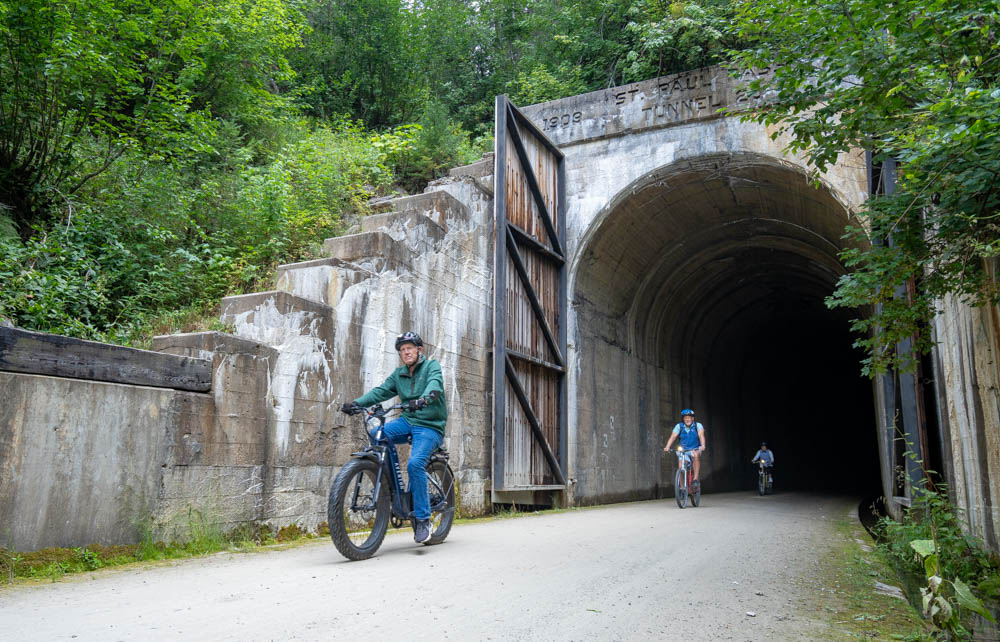
From my perch atop a rental bicycle, I can’t see much in front of me beyond a dark, gaping hole in the side of a mountain.
But if I pedal into that abyss, otherwise known as the St. Paul Pass Tunnel, I’ll eventually pop out on the other side of a ridgeline. From there I’ll begin a long, easy ride down a beginner-friendly route that cuts through a beautiful old forest with more than a century of history.
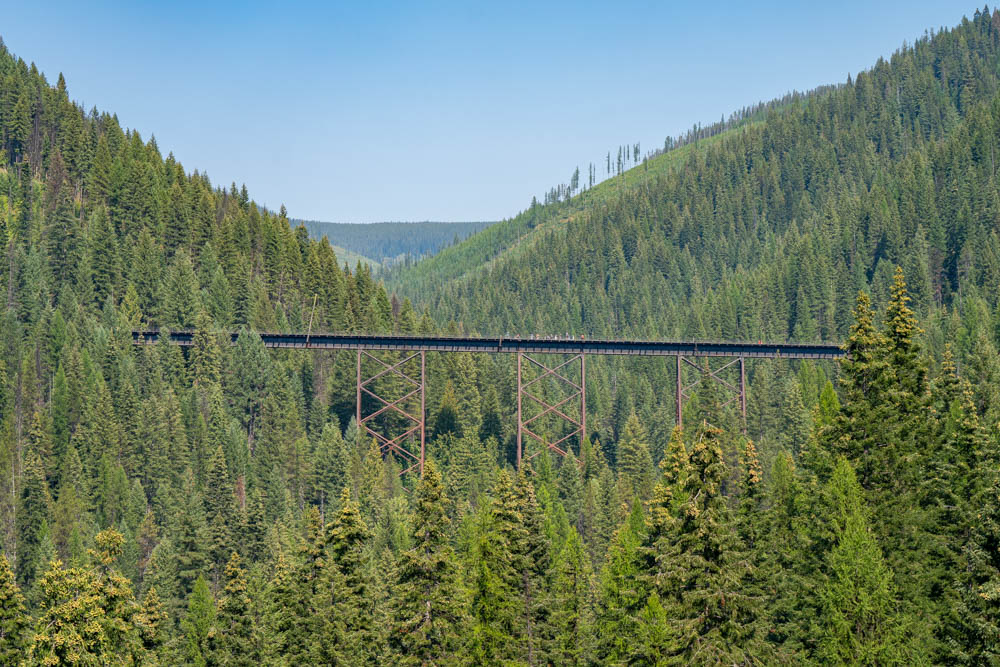
I’ve wanted to ride this Rails to Trails route for years, and I’ve finally made it. The former railroad line-turned-biking-path passes through ten tunnels and over seven trestle bridges as it winds for 15 miles(24km) through the tall pines and cedars of the Bitterroot Range.
I zip up my windbreaker and flip on the headlight mounted to my bike’s handlebars. Because I’ve purposefully planned this trip for after Labor Day, crowds are thin, leaves have taken on a slight hint of gold, and temperatures are hovering in the 70s. I dive in.
A Little History
Trains once chugged on tracks along this corridor, built in 1907 as an extension of a rail line that started in Chicago and headed west. Its history runs deep. During the Big Burn of 1910, a wildfire that consumed 3 million acres in Idaho and Montana, railroad employees reportedly carried hundreds of people to tunnels along the line, where flames couldn’t reach them.
In the 1940s, a train dubbed the Olympian Hiawatha, known for its “futuristic” design and “sky top” lounge with rounded glass windows, ran along the tracks. The railroad company went bankrupt twice in the next three decades, but trains still operated until 1980, when a portion of the line was finally abandoned.
The corridor’s time as a railroad line had ended, but its new life was just beginning. The steel tracks were removed, the surface improved, and informational signs posted.
In 1998, a 13-mile (21km) section of line below the St. Paul Pass Tunnel opened as a cycling path. In 2001, the 1.66-mile (2.67 km) St. Paul Pass Tunnel, or Taft Tunnel, opened to cyclists, too.
Getting Started on the Route of the Hiawatha
We picked up trail passes and rented bicycles at Lookout Pass Ski and Recreation Area, then arranged to have our bikes shuttled to the main trailhead. Alternately, you can rent a bike rack and transport the rental bikes yourself, or bring your own bike and skip the rentals altogether.
It’s a 7-mile (11.3km) drive from Lookout Pass to the parking area at what’s called East Portal, just across the Idaho state line in Montana.
The ride begins with a bang. That long tunnel of which I’m now staring down the barrel. Out in the sunshine, it’s warm. But I know once I get inside the dark passageway, that will change. Temperatures there hover around 47 degrees Fahrenheit year-round, and the ceiling drips with cold water.
We’re advised to pedal down the middle of the passage. If you ride too close to the edge, you might drop a tire in the narrow drainage ditches.
We push off, and right away I’m glad I brought my jacket. My headlamp broadcasts a beam of light into the murk.
For fun, I yodel into the darkness. The sound of my whooping and hollering bounces back like a boomerang. I slosh through some shallow puddles, pass a marker indicating I’ve crossed back into Idaho, and ten minutes later I emerge at the tunnel’s west side with a skunk-like stripe of mud down my back. We stop to peel off our jackets and admire the small waterfall tumbling down boulders near the tunnel opening.
Along the Way
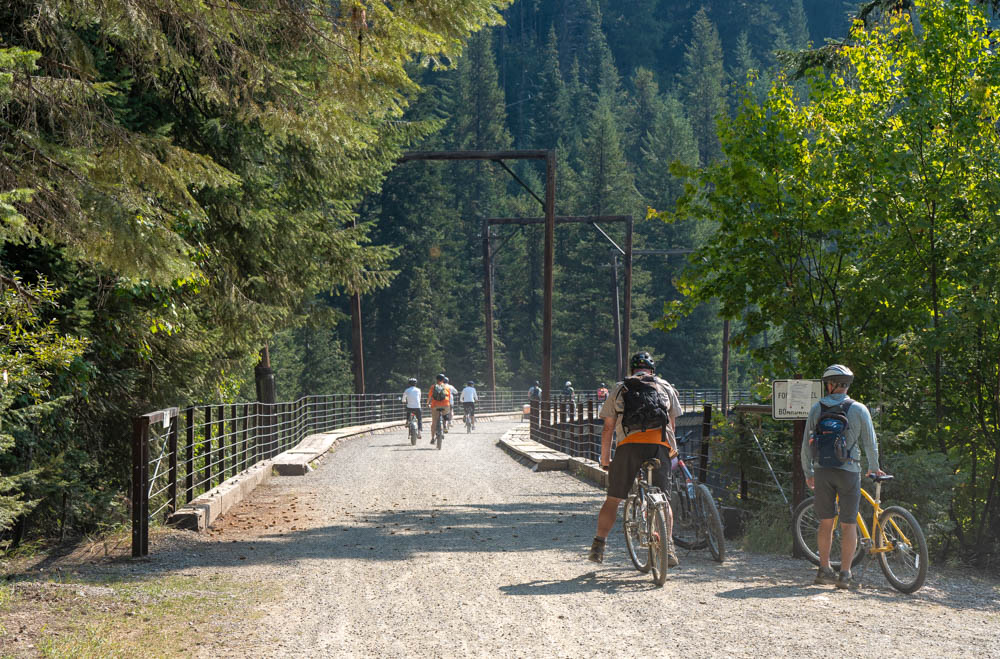
From here, the trail coasts gently downhill, descending about 1,000 feet (305 m) over the next 13 miles (21 km) as it makes its way to Pearson.
About 1,200 people pedal the route daily during the season, taking in spectacular views of the Bitterroot Mountains as they ride through the U.S. National Forest land. The route is one of 43 trails around the country named to the Rail-to-Trail Conservancy’s “Rail-Trail Hall of Fame,” and it’s easy to see why.
Highlights of my spin down the wide, forest-lined path? Rolling through what feels like a tunnel of green trees. Gliding across those high-rise trestle bridges – one of them 850 feet (259 m) long – which span valleys and serve up unmatched views of the surrounding forest.
We’ve brought along sandwiches and fruit and pull off by a creek about halfway down for a picnic. We sit quietly on moss-covered boulders as a mule deer tiptoes down for a drink from the stream. Later, we stop and hike beneath the edge of one of the trestles for a closer look at its underbelly.
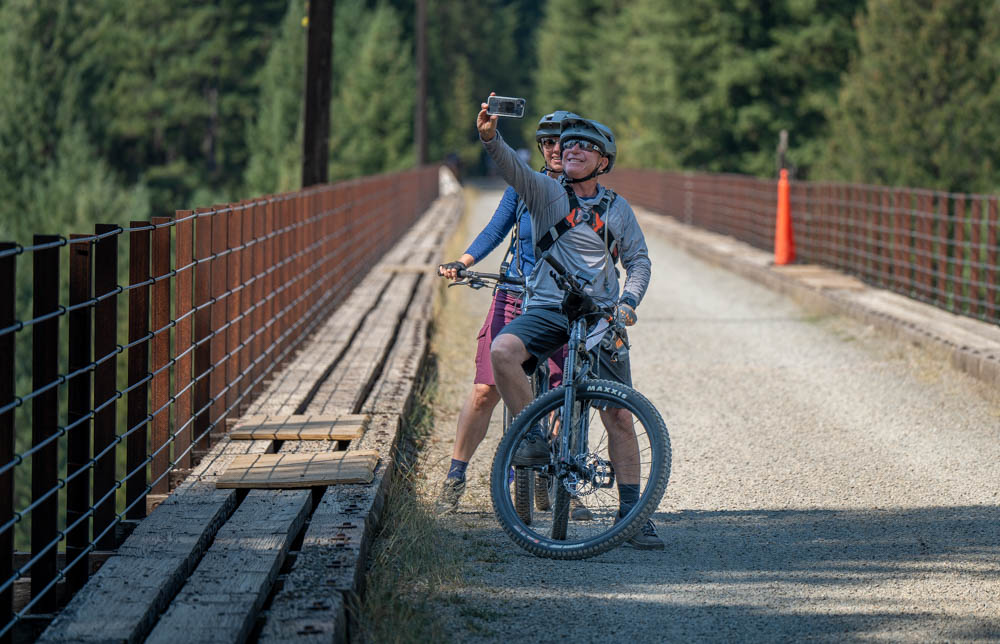
Forty-seven interpretive signs along the trail provide some history of the railroad that once rumbled the tracks. I learn about so-called “silk trains” that once carried expensive fabric along the route, the rough and tumble towns that sprouted nearby, and what it took to become a forest ranger a century ago.
It’s a family friendly ride, and we see plenty of kids (and seniors, too) zooming down the trail. (Be aware that vehicles are permitted on one short section of the trail. That’s another advantage to doing the ride after Labor Day – less traffic.)
I also learn about Full Moon Night Rides that take place during the summer, when you can join a guided group to pedal the Route of the Hiawatha after the sun goes down.
Finishing Up
When we reach the bottom of the trail about two and a half hours later (I stop for lots of photos), we wait about 45 minutes to catch a yellow school bus for the 35-minute shuttle back up to St. Paul Pass Tunnel. The shuttle is first come, first served, and a snack station near the pickup point sells hot dogs, soda and other treats.
The shuttle drops us off at the west opening of the tunnel, where we’re reunited with our rental bikes. We tug on our jackets again, turn on our headlights, and pedal the 1.66 miles back through the tunnel to the trailhead where we started.
My legs aren’t even tired, and now I know I need to come back ride the Hiawatha again. Next time, though, I’m skipping the shuttle and pedaling back up.
Pam LeBlanc is a longtime journalist based in Austin, where she covered fitness and recreation for the Austin American-Statesman for 21 years. She’s on the loose today as a freelance writer who specializes in stories about outdoor adventure and travel. Learn more about her at PamLeBlancAdventures.com.
Published on August 11, 2026